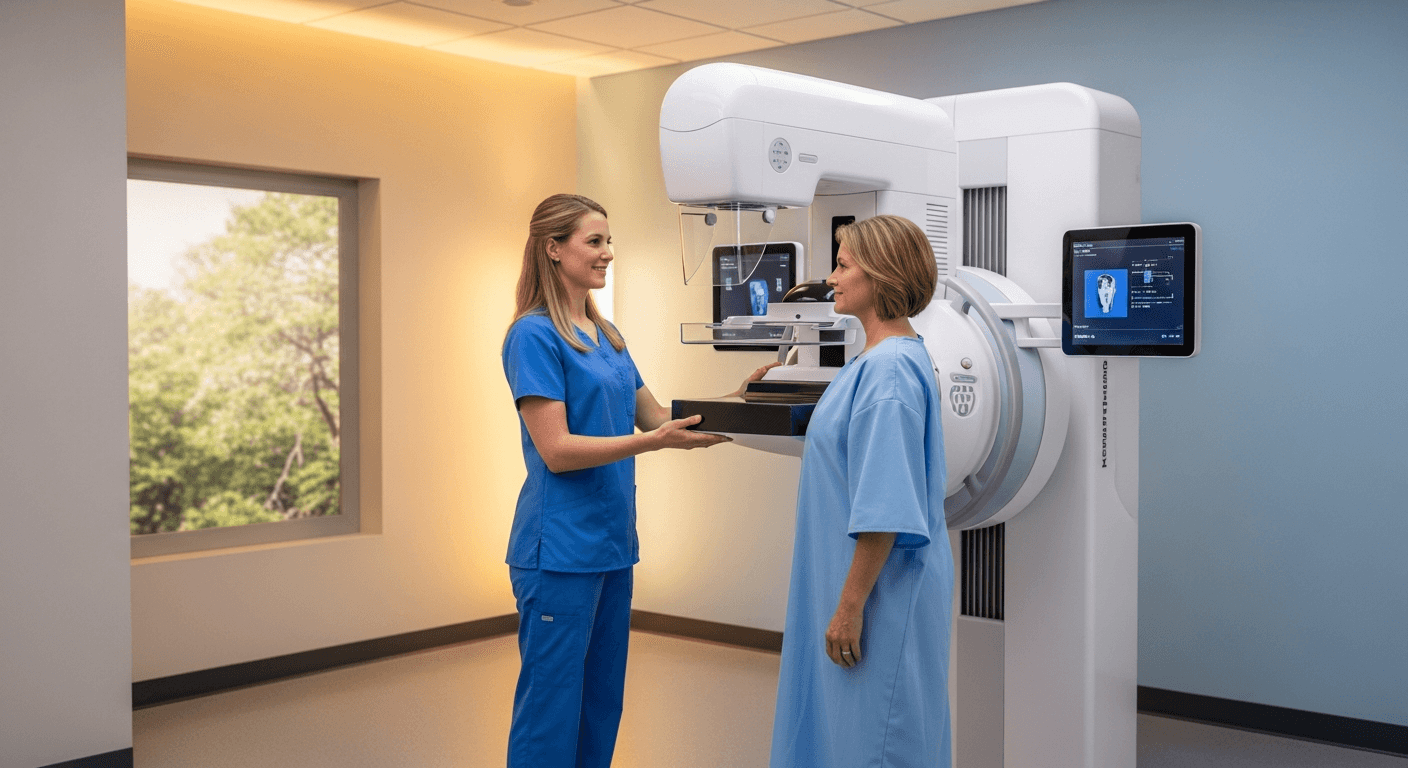
Breast cancer is one of the most common cancers among women worldwide. According to the American Cancer Society, approximately 1 in 8 women in the United States will develop invasive breast cancer over the course of her lifetime. Early detection remains the single most powerful tool in improving outcomes, and advances in imaging technology are making that detection more accurate than ever.
What Is 3D Mammography?
3D mammography, also known as digital breast tomosynthesis (DBT), is an advanced breast imaging technique that captures multiple images of the breast from different angles. A computer then reconstructs these images into thin, one-millimeter slices, allowing radiologists to examine breast tissue layer by layer rather than viewing the entire breast compressed into a single flat image.
Think of it like flipping through the pages of a book versus looking at the closed cover. Each "page" reveals detail that would otherwise be hidden behind overlapping tissue.
How Does 3D Compare to Traditional 2D Mammography?
While traditional 2D mammography has been the standard screening tool for decades, it has notable limitations. Overlapping tissue can obscure small tumors or create false shadows that mimic cancer. 3D mammography addresses both problems:
- Higher detection rates: Studies show 3D mammography detects 20-65% more invasive cancers compared to 2D alone.
- Fewer false positives: By reducing tissue overlap, 3D mammography decreases unnecessary callbacks by up to 40%, sparing women the anxiety and cost of additional testing.
- Better for dense breasts: Women with dense breast tissue benefit significantly because the layered imaging can distinguish tumors from surrounding tissue more effectively.
The exam itself feels very similar to a standard mammogram. The compression time is comparable, and the additional radiation exposure is minimal and well within safety guidelines.
When Should You Start Screening?
The American College of Radiology (ACR) recommends that all women undergo a breast cancer risk assessment by age 25. For women at average risk, annual mammography screening should begin at age 40. Women with higher risk factors, such as a family history of breast cancer, BRCA gene mutations, or prior chest radiation, may need to start screening earlier and may benefit from supplemental MRI screening.
Talk to your provider about your individual risk profile to determine the right screening schedule for you.
3D Mammography at Garden OB/GYN
At Garden OB/GYN, we are proud to offer in-house 3D mammography at our Brooklyn, Queens, and Lake Success locations. Our facilities are ACR (American College of Radiology) accredited, ensuring that our equipment, personnel, and quality control meet the highest national standards.
Having mammography available at the same practice where you receive your gynecological care means streamlined coordination, faster results, and one less appointment to schedule elsewhere. Our team will guide you through every step, from scheduling to results review.
If you are due for a screening or have questions about whether 3D mammography is right for you, contact Garden OB/GYN to schedule your appointment today.